1. Land Clearing: Trees and Stumps
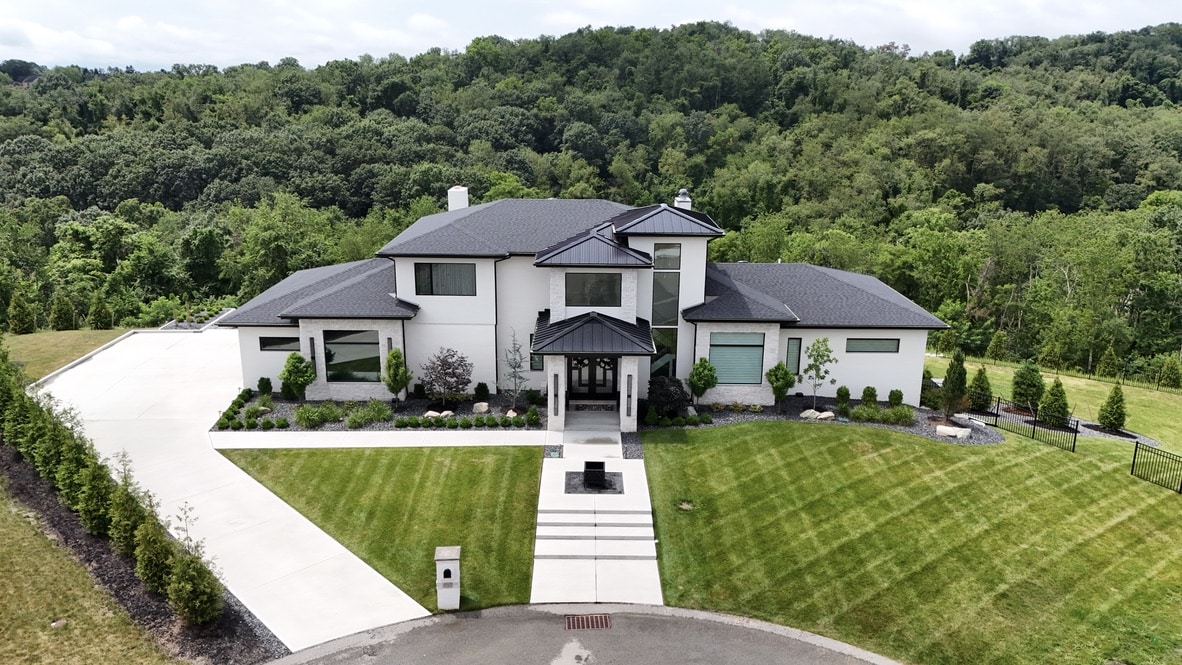
One of the first (and most visible) costs you’ll encounter is clearing the land of trees, brush, and stumps.
What affects the cost:
- The density of tree coverage on your lot
- The size and type of trees (removing mature hardwoods costs more than clearing smaller growth)
- Stump removal and grinding (stumps can’t just be buried; they need to be properly removed)
- Disposal or chipping of cleared vegetation
- Selective clearing vs. full-site clearing
Tree clearing and stump removal estimates commonly range between $15,000 and $40,000+, varying based on lot size and tree density.
2. Utility Runs: Distance and Infrastructure
Getting water, gas, electric, and sewage to your building site is often the single biggest variable in land development costs. Before purchasing land you want to make sure that you have a positive percolation test.
Distance is the key factor. When public utilities are located close to the build site, costs are generally manageable. However, as the distance increases—or if utilities are not available at all—costs can rise significantly.
What impacts utility costs:
- Distance from the road to your building site
- Whether utilities exist at the road or need to be extended from further away
- Terrain between the road and building site (rock, the need to mol under the road, steep slopes, wetlands)
- Utility company requirements (some require transformers, boring under roadways, or upgraded infrastructure)
- Private well and septic system needs if public utilities aren’t available
In some Pittsburgh-area municipalities, you might spend $30,000+ on straightforward utility connections. In more rural locations, or sites with challenging access, utility costs alone can exceed $100,000–$150,000+.
Pro tip: Always have utilities investigated during your due diligence period before purchasing land. A beautiful piece of property can quickly become financially unfeasible if utility access is prohibitively expensive.
Always conduct a thorough investigation of utility access during your due diligence period before purchasing land. What may appear to be a dream property can quickly turn into a financial burden if extending water, sewer, electric, or gas service is costly or logistically challenging. To protect your investment, include specific contingencies in the purchase agreement that allow you to withdraw or renegotiate the offer if utility access proves inadequate or prohibitively expensive. Don’t move forward without concrete answers—this step could save you tens of thousands of dollars and months of delays.
3. Driveway Construction: Temporary and Permanent
Your driveway isn’t a one-time cost. It’s actually two separate investments during the building process.
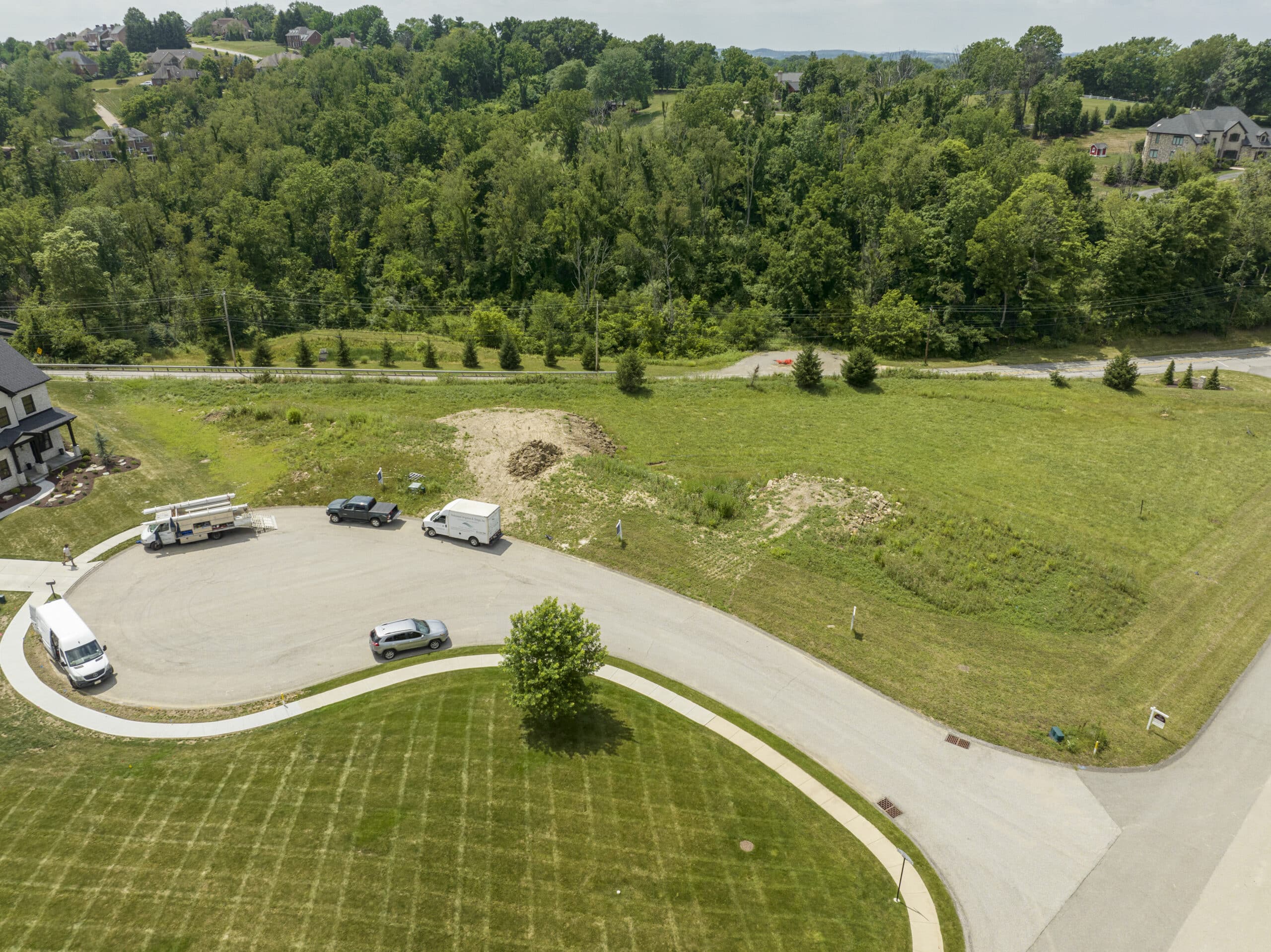
Temporary Driveway: During construction, heavy equipment, material deliveries, and contractor vehicles need stable access to your site. This temporary driveway must withstand significant weight and weather. Temporary driveways can range in price depending on the length and base requirements. This process involves more than just clearing the area and adding temporary gravel if done correctly.
Permanent Driveway: Once your home is complete, the temporary drive is typically replaced with your finished driveway, whether that’s asphalt, concrete, or renewing gravel.
Cost factors for driveways:
- Length of driveway (the biggest variable: a 200-foot driveway costs far less than an 800-foot driveway)
- Terrain and grading requirements
- Base preparation and stone depth
- Width (standard vs. wider for multiple vehicles)
- Material choice for permanent driveway
- Drainage considerations
A longer asphalt driveway can be $35,000+. A longer paver driveway on a challenging slope could be at $60,000–$80,000 or more.
4. Stormwater Management and Retention
Pennsylvania and local Pittsburgh municipalities have strict stormwater regulations. You can’t simply let rainwater run off your property unchecked. You need to manage it properly.
Why this matters: Modern stormwater regulations require that developed properties don’t increase runoff to neighboring properties or overtax municipal systems. This often means installing:
- Retention basins or underground detention systems
- Swales and drainage channels
- Permeable surfaces or rain gardens
- Pipe systems to redirect water flow
Cost factors:
- Lot size and amount of impervious surface (roof, driveway, patios)
- Soil percolation rates and existing drainage patterns
- Municipal requirements (these vary significantly by township)
- Topography of your site
Depending on the amount of impervious surface, upgraded stormwater solutions could add $35,000 or more. This is a cost you’ll want to be aware of before moving forward with the build.
- Erosion and Sediment Controls
During construction, exposed soil is vulnerable to erosion, and needs to be controlled during the entire build process.
You’ll need temporary measures like:
- Silt fencing around the perimeter
- Sediment traps and basins
- Stabilized construction entrances
- Dust control measures
- Temporary seeding or mulching
While not the most expensive line item, erosion controls typically run $5,000–$15,000 depending on your site size and local requirements. Failing to maintain these properly can result in fines and stop-work orders, so this isn’t an area to cut corners.
6. Surveys and Engineering
Before any dirt is moved, you need professional surveys and engineering plans.
What’s typically required:
- Boundary survey: Confirms property lines and easements
- Topographic survey: Maps elevation changes and existing features
- Site engineering: Designs grading, drainage, and utility plans
- Soil testing: Determines bearing capacity and percolation rates
- Environmental assessments: Identifies wetlands, floodplains, or protected areas
This investment is crucial. Proper engineering prevents costly mistakes and ensures your home is positioned optimally for drainage, views, and long-term stability.
7. Additional Variables
The factors above are the major cost drivers, but there are dozens of smaller variables that can impact your total land development budget:
- Rock excavation: Hitting rock can add significant costs if encountered.
- Transformer installation: Some utility companies require dedicated transformers for new service
- Septic system design: If public sewer isn’t available, septic systems range from $25,000–$50,000+
- Well drilling: Private wells can cost can range depending on depth to water
- Grading and fill: Leveling a building pad may require importing or removing significant amounts of soil
- Soil and Coal Status Reports: These reports are critical to understanding potential ground-related challenges on your lot. If the soil is unstable or contaminated, remediation efforts may significantly increase your build costs. Additionally, if the property sits above an old mine, grouting or a grade beam foundation may be required to ensure structural stability—both of which can add substantial expenses to your project
- Access roads: If your property is off a private road, you may need road improvements or agreements
- Permit fees: Municipal permits, tap fees, and impact fees vary widely by location
- Environmental mitigation: Wetland buffers or tree replacement requirements add costs
This is why preliminary site assessments are so valuable. They help identify these hidden variables before you commit to a property.