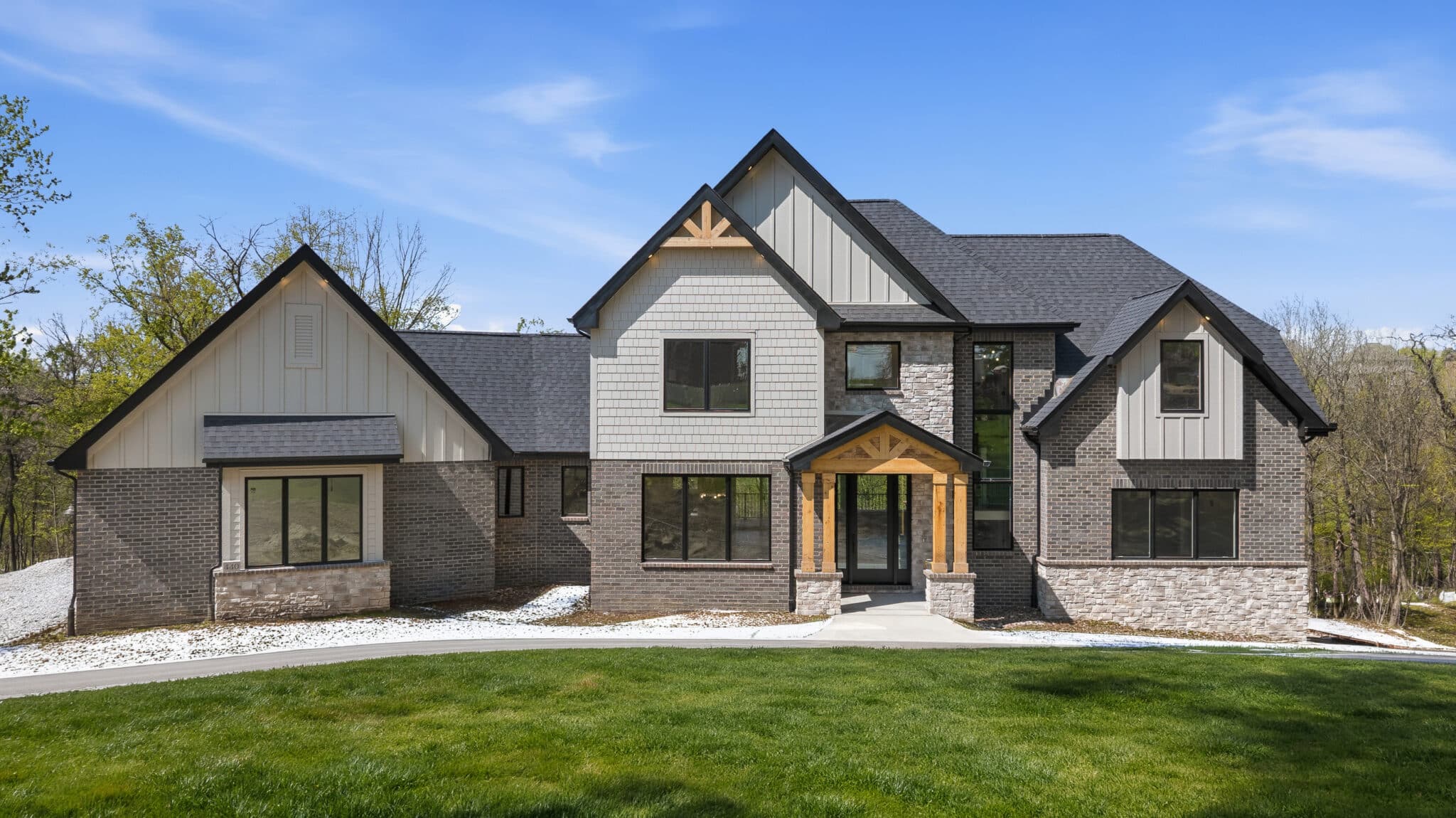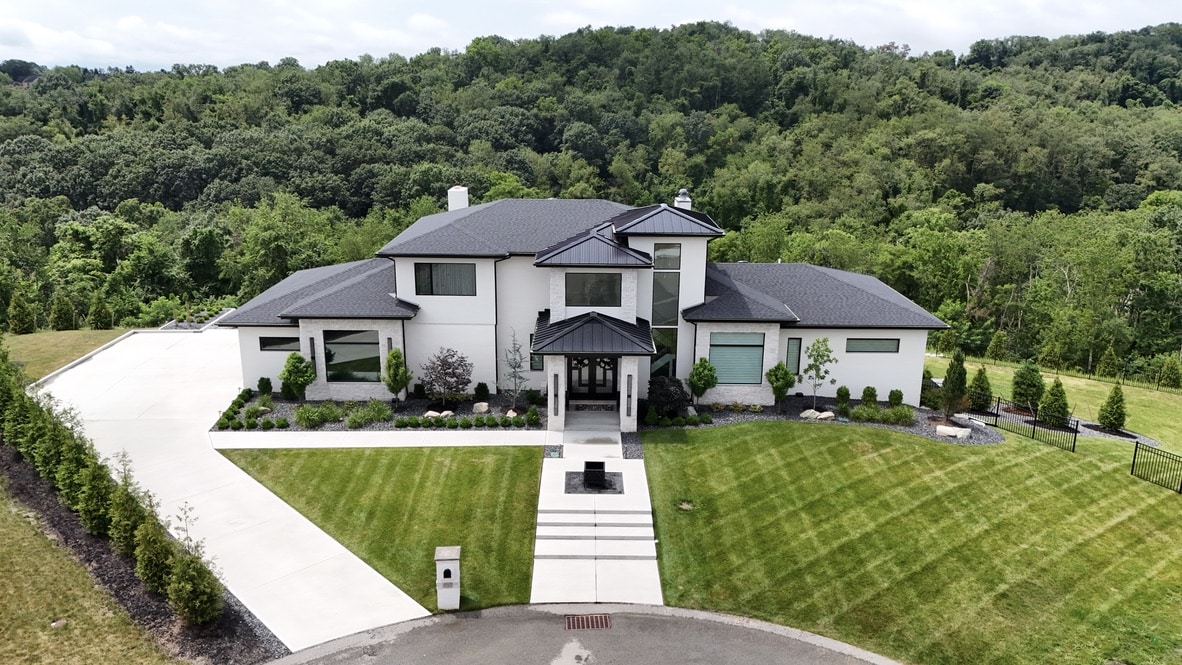
Walk into conversations with five different custom home builders in the Pittsburgh area, and four of them will use the exact same words. Luxury. Custom. Premium. White glove. The language is identical. The brochures look similar. The model homes photograph beautifully. So how are you supposed to know who actually delivers?
The answer isn’t in the marketing. It’s in eight specific areas where builders either hold the line or quietly let things slide.
The Problem with "Luxury" as a Label
The word “luxury” has been stretched so far in the home building industry that it barely means anything anymore. Builders apply it to upgraded cabinet pulls. To granite countertops that were standard fare a decade ago. To neighborhoods where the lot sizes are generous but the homes themselves are production builds dressed up with a few premium finishes.
Real luxury is not a finish level. It is a construction philosophy that runs from the first site visit all the way through the final walkthrough. It shows up in decisions the buyer never sees directly, in the framing behind the drywall, in the way water is managed at every seam and transition, in the trades that show up to do the work. The builders who understand that are in a different category. The ones who don’t are selling you a label.
The 8 Major Differences Between Luxury Custom Home Builders
1. Site Planning
Most buyers think of site planning as a preliminary checkbox. Pick the lot, stake the corners, position the house, move on. At the production builder level that is essentially what happens. The home gets placed on the land with minimal consideration for how the two relate to each other.
At the true luxury level site planning is part of the design. Where the home sits on the lot affects everything that comes after it. How natural light moves through the home throughout the day. Which rooms capture the best views and which face a neighbor’s roofline. How water moves across the grade during a heavy Pittsburgh rain and where it goes when it gets there. Whether the driveway approach feels considered or like an afterthought.
A builder who takes site planning seriously is asking questions before the architect draws a single line. Which direction does this lot face? Where does the sun set from the back of the property? Is there a view corridor worth preserving or framing? What does the natural drainage pattern look like and how does the foundation placement account for it?
Get site planning wrong and you spend years managing the consequences. Wet basements. Rooms that never get the light you expected. A home that sits awkwardly on its lot instead of belonging to it. Get it right and the home feels inevitable, like it was always supposed to be exactly there.
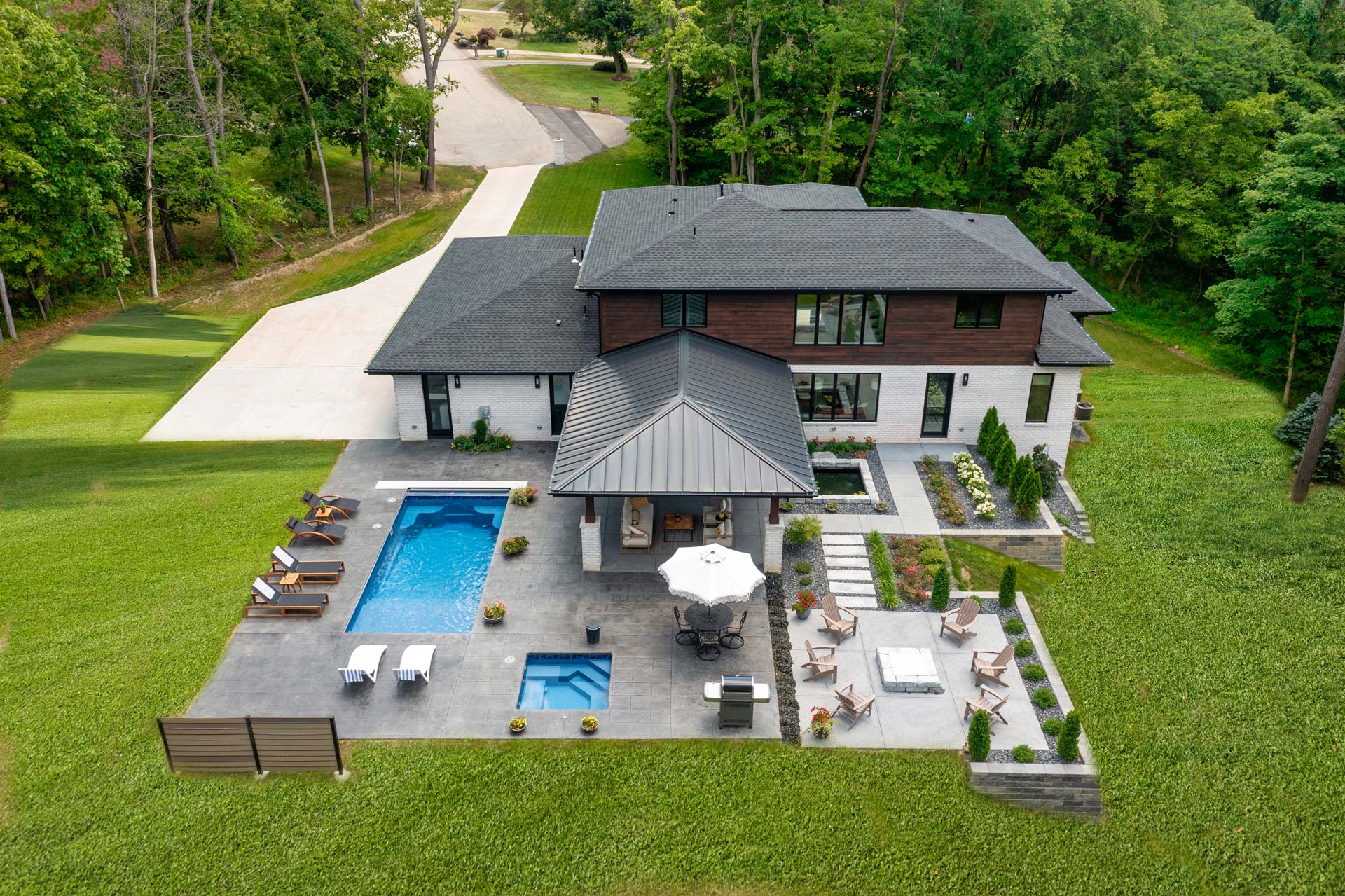
Costa’s process addresses site planning before design work begins. It is one of the first conversations, not one of the last.
2. Framing Quality
Framing is the part of your home you will never see again once the drywall goes up. That invisibility is exactly why it is where some builders make compromises they know you will never catch.
Lumber grade matters. Engineered lumber versus dimensional lumber in critical applications matters. How corners are framed, how headers are sized, how floor systems are engineered to eliminate bounce and flex underfoot. These are not glamorous decisions but they are consequential ones. A home that feels solid when you walk across the second floor feels that way because someone made the right call during framing. A home that creaks and shifts two years after move-in tells a different story.
Precision matters just as much as materials. Walls that are plumb and square make everything downstream easier and better. Cabinetry fits cleaner. Trim lines up properly. Doors hang and operate the way they should. When framing is sloppy those problems get patched and hidden rather than corrected, and they have a way of showing up later when you least expect them.
At the luxury level there is no excuse for cutting corners on framing because the framing is the home. Every finish you select, every detail you invest in, every room you designed around your lifestyle sits on top of what the framing crew put in place. A builder who treats that phase casually is telling you something important about how they operate when no one is watching.
3. Waterproofing and the Building Envelope
If framing is the skeleton of your home, the building envelope is its immune system. It is the collection of systems, materials, and details that keep water, air, and moisture from getting where they do not belong. And it is one of the most telling indicators of where a builder actually stands at the high end.
Water is patient. It will find every gap in flashing that was installed carelessly. Every window that was set without a proper drainage plane behind it. Every transition between materials where the caulk was applied instead of the correct waterproofing detail. It does not announce itself immediately. It works quietly behind your walls and under your floors for months or years before the damage becomes visible. By the time you see it the repair bill is significant and the disruption to your home is real.
Proper building envelope execution covers a lot of ground. How windows and doors are integrated into the wall assembly. How roof to wall transitions are handled. How penetrations for plumbing, electrical, and mechanical are sealed. How foundation waterproofing is specified and installed. How the drainage plane behind your cladding is managed so that any water that gets past the exterior has a path out rather than a path in.
None of this is visible in a finished home. You cannot walk through a model and evaluate the building envelope by looking at it. What you can do is ask your builder direct questions about their waterproofing specifications and watch how they respond. A builder who knows this work answers in detail without hesitation. A builder who glosses over it is telling you something.
This is an area where Costa holds a firm line. The work that happens behind the finished surfaces is held to the same standard as everything the client can see, because we know that is where the long term performance of the home is decided.
4. Project Management
Building a custom luxury home involves dozens of moving parts happening simultaneously across months of construction. Architects, engineers, permit agencies, material suppliers, and a roster of specialized trades all have to show up in the right sequence, do their work correctly, and hand off cleanly to whoever comes next. When that coordination works well the client barely notices it. When it breaks down the client feels every ripple.
Poor project management is one of the most common sources of frustration in custom home building and one of the least talked about. Delays that compound on each other because one trade ran late and pushed everything behind it. Materials that were not ordered in time and sit as a line item on a change order. Subcontractors who show up to a phase that is not ready for them, do partial work, and have to come back.
Every one of those situations costs the client time, money, or both.
What good project management looks like at the luxury level is proactive rather than reactive. Your builder knows three weeks in advance what is coming, what needs to be ordered, what needs to be inspected, and what decisions need to be made before work can proceed. You are not getting phone calls asking you to make urgent choices because someone forgot to plan ahead. The schedule is a living document that is actively managed, not a rough estimate that gets abandoned after the first month.
Communication is a direct output of project management quality, which is why the two are inseparable. A well managed project produces a builder who has real information to share with you at every stage. A poorly managed one produces a builder who is vague, evasive, or simply out of touch with what is happening on your job site.
The New Life® Process was built specifically around this problem. Every stage of the build has a defined structure, clear handoffs, and a dedicated point of contact so that nothing falls through the cracks and the client always knows where things stand.
5. Communication
You are about to spend a significant amount of money building the most personal space you will ever own. The least you should expect is to know what is happening with it.
That sounds obvious. In practice, it is one of the sharpest dividing lines between builder tiers. At the production level, communication tends to be reactive. You call when you have a question, and someone eventually gets back to you. You drive by the job site to see what progress looks like because nobody thought to send you an update. You find out about a problem when it has already become a decision that needs to be made immediately, with no time to think it through.
At the true luxury level, communication is a regular deliverable, not an afterthought. Your builder has a system for keeping you informed that does not depend on you chasing them down. You know what is happening this week, what is coming next week, and what decisions are on the horizon so you can think about them before you are put on the spot. When something unexpected comes up, and in any custom build, something unexpected always comes up, you hear about it from your builder before you hear about it from anyone else.
The tone of that communication matters too. You are not looking for spin or reassurance. You are looking for straight information delivered by someone who respects your intelligence and your investment. A builder who tells you the truth when things get complicated is a builder you can trust. One who manages your perception instead of managing your project is a problem waiting to surface.
What you want to feel throughout this process is informed and confident, not anxious and ignored. That feeling does not happen by accident. It is the result of a builder who treats communication as part of the service, every week, from the first meeting to the final walkthrough.

6. Millwork and Detail Execution
If you want to know where a luxury home builder actually stands, look at the millwork. Not the countertop selection or the fixture finishes. The trim. The built-ins. The way a ceiling transitions into a wall. The profile of a door casing and whether it was installed with the care it deserves or nailed up and caulked into submission.
Millwork is where luxury homes earn the label or lose it. It is also where corners get cut most quietly, because to an untrained eye a mediocre trim job and an exceptional one can look similar in a quick walkthrough. The difference shows up in the details. Whether inside corners are coped or mitered and filled. Whether built-in cabinetry was designed as part of the room or dropped into it as an afterthought. Whether the transition between your hardwood floor and your tile was handled with intention or with whatever threshold piece was easiest to grab.
These are not small things. They are the details that determine whether a finished room feels crafted or merely constructed. They are what a homeowner notices every single day without necessarily being able to articulate why one home feels more refined than another. Walk into two homes with identical floor plans and similar finish budgets and the one with superior millwork execution will feel like a different category of home. Because it is.
Executing millwork at a high level requires tradespeople who take genuine pride in the work, a builder who holds them to a real standard, a vision of the completed home shared between them, and enough time built into the schedule to do things correctly rather than quickly. All of those conditions have to be present. When any one of them is missing the millwork tells on itself, and no amount of expensive stone or designer lighting fixes what poor detail execution does to a room.
Costa’s approach to millwork starts at the design stage. The details are drawn and specified before anyone picks up a tool, because improvising trim profiles and built-in configurations in the field is how you get results that look improvised.
7. Subcontractor Quality
Here is something the home building industry does not advertise loudly. The builder you hire is not doing most of the physical work in your home. Their subcontractors are. The framing crew, the plumbers, the electricians, the HVAC installers, the tile setters, the painters, the finish carpenters. Every one of those trades is a separate company with their own standards, their own crew, and their own definition of acceptable work, and you’re putting the trust in your builder to choose those companies.
Which means the quality of your home is only partially determined by the builder whose name is on the contract. The rest is determined by who that builder puts in your home and how hard they push them to perform.
At the production builder level, subcontractors are often selected primarily on price. The trade that comes in lowest gets the work. Volume relationships with high turnover crews keep costs down and margins up. The result is a home where the visible finishes might look acceptable but the work behind them reflects the standards of whoever was cheapest that season.
At the true luxury level, subcontractor relationships are long term and selective. The best builders in the Pittsburgh area have trades they have worked with for years, crews who know exactly what standard is expected on their job sites and who take pride in meeting it. Those relationships are not accidental. They are built over time through consistent work, fair treatment, and a shared commitment to quality that makes the best tradespeople want to keep coming back.
It is worth asking any builder you interview directly about their subcontractor relationships. How long have they worked with their primary trades? Do those trades work exclusively or near exclusively with them? What happens when a subcontractor’s work does not meet the standard? A builder who has genuine answers to those questions has built something real. One who pivots to talking about their selection process without naming specifics probably has not.
Costa has cultivated subcontractor relationships over more than two decades of building in the Pittsburgh area. The trades in our homes are not the lowest bidder. They are the best people for the work, and they know what Costa expects before they ever set foot on a job site.
8. Willingness to Truly Customize
This one is where a lot of builders who call themselves custom get found out.
The word “custom” has a spectrum. On one end you have production builders who offer a handful of floor plans and let you choose your cabinet color and countertop finish from a predetermined menu. They call that “custom” despite the customization ending at the colors you choose. On the other end, you have builders who start with a blank page and build whatever the client actually wants, regardless of whether it fits a template they have used before. That is truly custom. Everything in between is a variation of the first option dressed up in the language of the second.
The way to find out where a builder actually falls on that spectrum is to ask for something they have not done before. Bring a specific request to the conversation, something that reflects how you actually want to live, and watch what happens. A builder with genuine customization capability gets interested. They start thinking through how to make it work. They ask questions about how you intend to use the space and what the experience should feel like. The conversation moves forward.
A builder whose custom offering has limits gets uncomfortable. The request gets redirected toward something they already know how to do. You are told the idea is complicated or cost prohibitive before anyone has actually priced it out. The menu reasserts itself in subtle ways until you find yourself choosing from options again rather than designing from scratch.
True customization requires more from a builder. It requires an architect relationship deep enough to translate unconventional ideas into buildable plans. It requires subcontractors skilled enough to execute details they have not done a hundred times before. It requires a project management structure flexible enough to accommodate a home that does not follow a familiar pattern. And it requires a builder who finds that kind of work genuinely rewarding rather than genuinely inconvenient.
Costa was built around clients who know exactly what they want and have been told by other builders that it is too complicated. The New Life® Process starts with understanding your lifestyle, your vision, and your non-negotiables before a single design decision is made. That is not a sales approach. It is the only way to build a home that is actually yours.

The Bar Is Higher Than Most Builders Want to Admit
These eight factors are not a wish list. They are the baseline for what luxury custom home building should deliver at every project, every time. The builders who meet that standard consistently are not common. But they exist, and knowing what to look for is the first step toward finding one.
Costa Homebuilders has been building at this standard in the Greater Pittsburgh area since 1998. The 2024 BAMP Housing Award for Best Single Family Detached Home over $2 million and eight consecutive Best of Houzz recognitions reflect what happens when every one of these factors is taken seriously on every project. That track record is not an accident. It is the result of holding the line on the things that are easy to cut corners on when no one is looking.
If you are ready to have a real conversation about building your custom luxury home, we are ready to answer every question on this list and then some.
Schedule a consultation with Costa Homebuilders at 412-384-8170 or reach us at info@costahomebuilders.com.